C1 · Buying guide
C1 Corvette buyer's guide (1953–1962): every year, the fuelies, the fakes and what to pay
Published
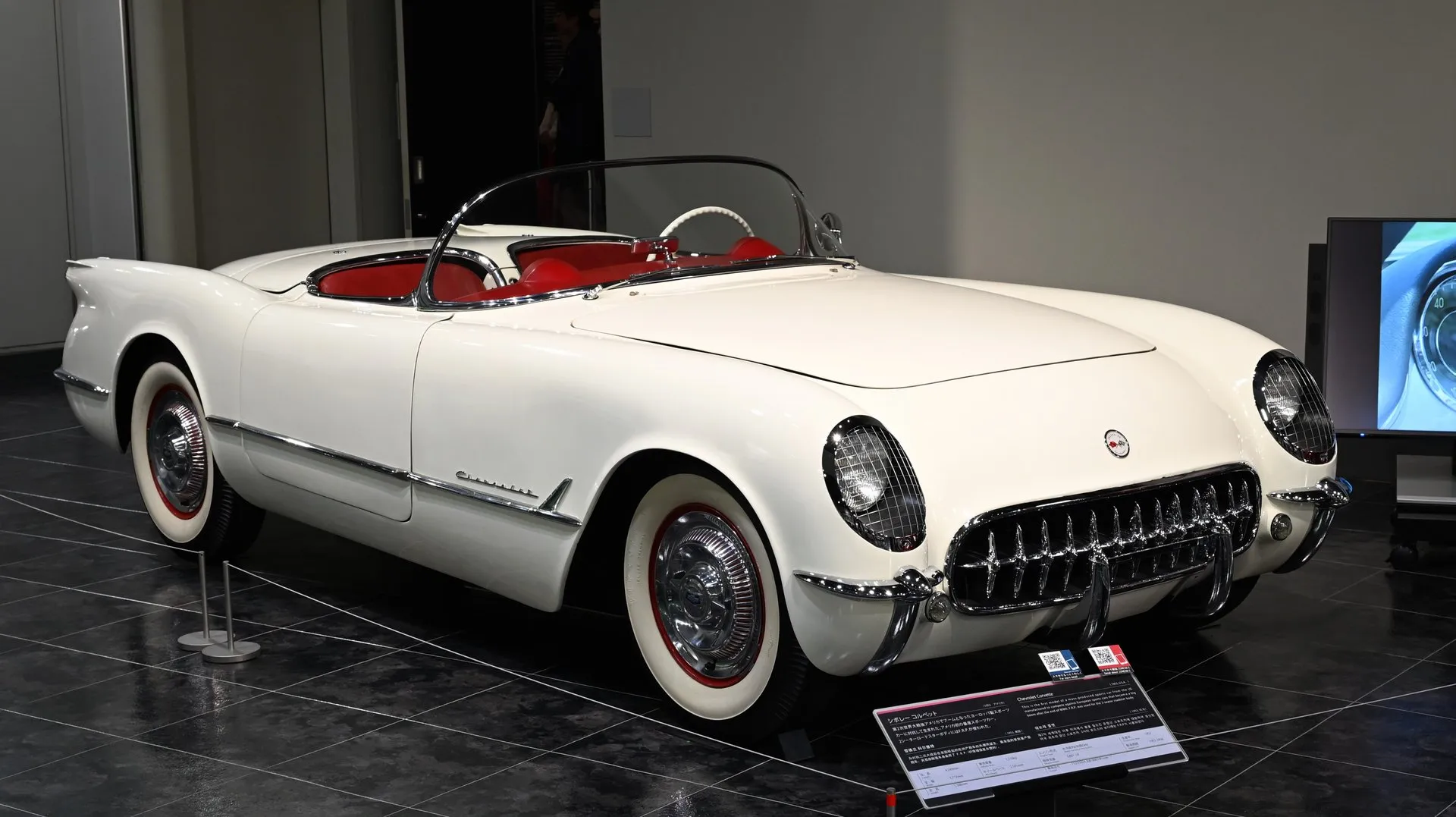
The first Corvette couldn’t be ordered with a clutch pedal. Every one of the 300 built for 1953 was Polo White with a red interior, a 150 hp Blue Flame six and a Powerglide automatic, put together largely by hand on a pilot line. By the tenth model year, a new Corvette could leave the dealer with a 360 hp fuel-injected 327 V8 and a four-speed. That climb is the story of the C1 (1953–1962), the decade in which a Motorama show car grew into America’s sports car.
Buying one is a different job from buying any later Corvette. The federal records hold one complaint for all ten years, and there’s no steel cage around the cabin to rot. The real question is whether the car is what its seller says it is: engines get swapped, fuel injection gets added, serial tags get reproduced, and no C1 carries its colors on a tag. Get that right, and the fun part is picking which of ten very different years you want.
- Built: 69,015, from 300 in 1953, all Polo White, to 14,531 in 1962, every one a two-seat convertible. This guide found no reliable count of how many survive.
- Launched: shown at GM’s Motorama on January 17, 1953, with the first production car built (opens in new tab) in Flint, Michigan, on June 30, 1953. St. Louis built them from 1954.
- Engines: the 150 hp Blue Flame six, a 265 V8 from 1955, the 283 from 1957 and the 327 for 1962, topped by the 360 hp fuel-injected 327 (1962). Fuel-injected cars totaled 7,828 from 1957 to 1962. All ratings are gross.
- Price: Hagerty’s #3 (Good) average for the generation was $80,716 (January 2026); the median Bring a Trailer sale was $68,250 (12 months to October 2026).
- Best years, by this site’s reckoning: 1954 for the early look, a documented 1957 fuelie for the history, 1961–1962 for driving.
C1 · 1953–1962 Key figures
- Built
- 69,015
- Fewest built
- 300 in 1953, all Polo White
- First engine
- 150 hp Blue Flame six
- Top engine
- 360 hp fuel-injected 327 (1962)
- Fuel-injected cars
- 7,828 from 1957 to 1962
- Hagerty #3 average
- $80,716 (January 2026)
- Bring a Trailer median
- $68,250 (12 months to October 2026)
Section 01
C1 Corvette production and horsepower by year
| Year | Built | Base engine | Strongest engine | Fuel-injected |
|---|---|---|---|---|
| 1953 | 300 | 235 six, 150 hp | None | None |
| 1954 | 3,640 | 235 six, 150 hp (155 hp later) | None | None |
| 1955 | 700 | 235 six, 155 hp | 265 V8, 195 hp | None |
| 1956 | 3,467 | 265 V8, 210 hp | 265, 225 hp (two four-barrels) | None |
| 1957 | 6,339 | 283 V8, 220 hp | 283, 283 hp (fuel injection) | 1,040 |
| 1958 | 9,168 | 283, 230 hp | 283, 290 hp (fuel injection) | 1,511 |
| 1959 | 9,670 | 283, 230 hp | 283, 290 hp (fuel injection) | 920 |
| 1960 | 10,261 | 283, 230 hp | 283, 290 hp (fuel injection) | 859 |
| 1961 | 10,939 | 283, 230 hp | 283, 315 hp (fuel injection) | 1,580 |
| 1962 | 14,531 | 327, 250 hp | 327, 360 hp (fuel injection) | 1,918 |
How many C1 Corvettes were made? 69,015, and the yearly figures add up. Most come from the Corvette Black Book pages reproduced in GM’s Heritage Center kits (all in this site’s owner’s manual library); 1953 comes from GM, 1957 from Corvette Action Center and Sports Car Market.
Gross, not net. GM’s pages give both for some years: the 1962 base 327’s 250 hp gross was 210 net. C1 ratings can’t be compared directly with the net figures GM used from 1972 (see the guide to the C3 (1968–1982)).
The 1960 fuelie puzzle. GM’s 1960 specification pages advertise fuel-injected 283s at 275 and 315 hp with aluminum heads. The Black Book production pages in the same kit list 250 hp (100 built) and 290 hp (759) instead, and say delivery of a 1960 with factory aluminum heads to a retail customer has not been confirmed. The 275 and 315 hp ratings became real for 1961, with iron heads.
Section 02
What changed, year by year
The four groups here are the ones classic.com uses for its C1 market, and the breaks fall where GM changed the body.
1953–1955: the six-cylinder roadster, then the first V8
1953. All 300 came off the Flint pilot line at $3,498, the 235 cubic-inch six breathing through three Carter side-draft carburetors (GM’s 1953 specifications). GM’s news site calls it “the first mass-produced car with a plastic-laminated fiberglass body.”
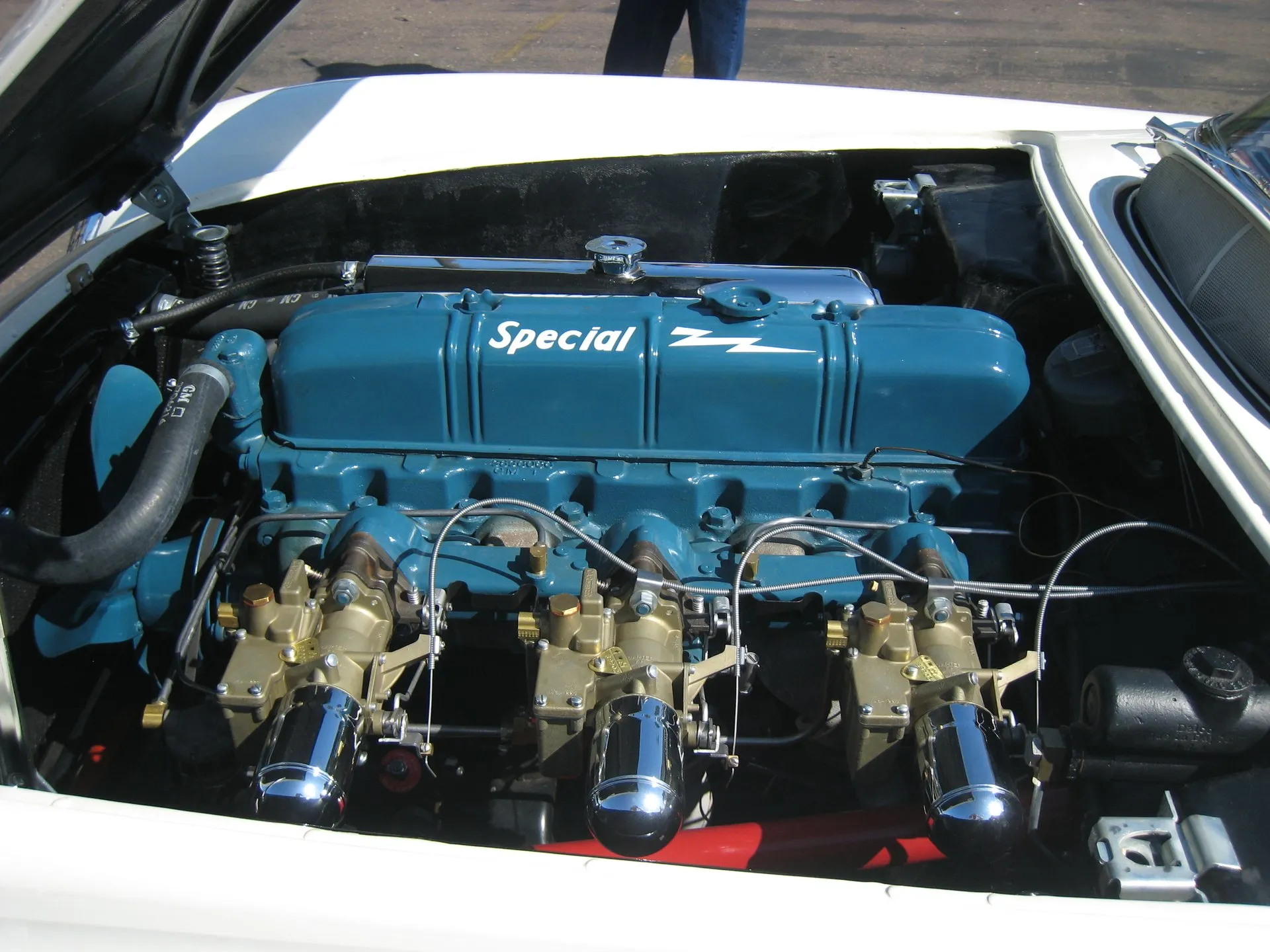
1954. Production moved to St. Louis and rose to 3,640, still all six and Powerglide; a camshaft change during the year took the rating from 150 to 155 hp. The base price started at 1953’s $3,498 and dropped to $2,774 only from October 28, 1954, not counting the Powerglide every car carried.
1955. The V8 arrived: a 265 rated 195 hp, with 12-volt electrics where the six kept six volts. A V8 car wears an enlarged gold “V” in the fender script and an extra V in its serial (VE55S). Only 700 were built, with more than 1,100 unsold 1954s on hand when production began. A handful kept the six, which came only with the Powerglide, and about 75 late V8s got a three-speed manual. The Black Book calls it one of the most mysterious Corvettes to document, and some early cars have had V8s swapped in since: a 1955 needs paperwork.
1956–1957: coves, roll-up windows and fuel injection
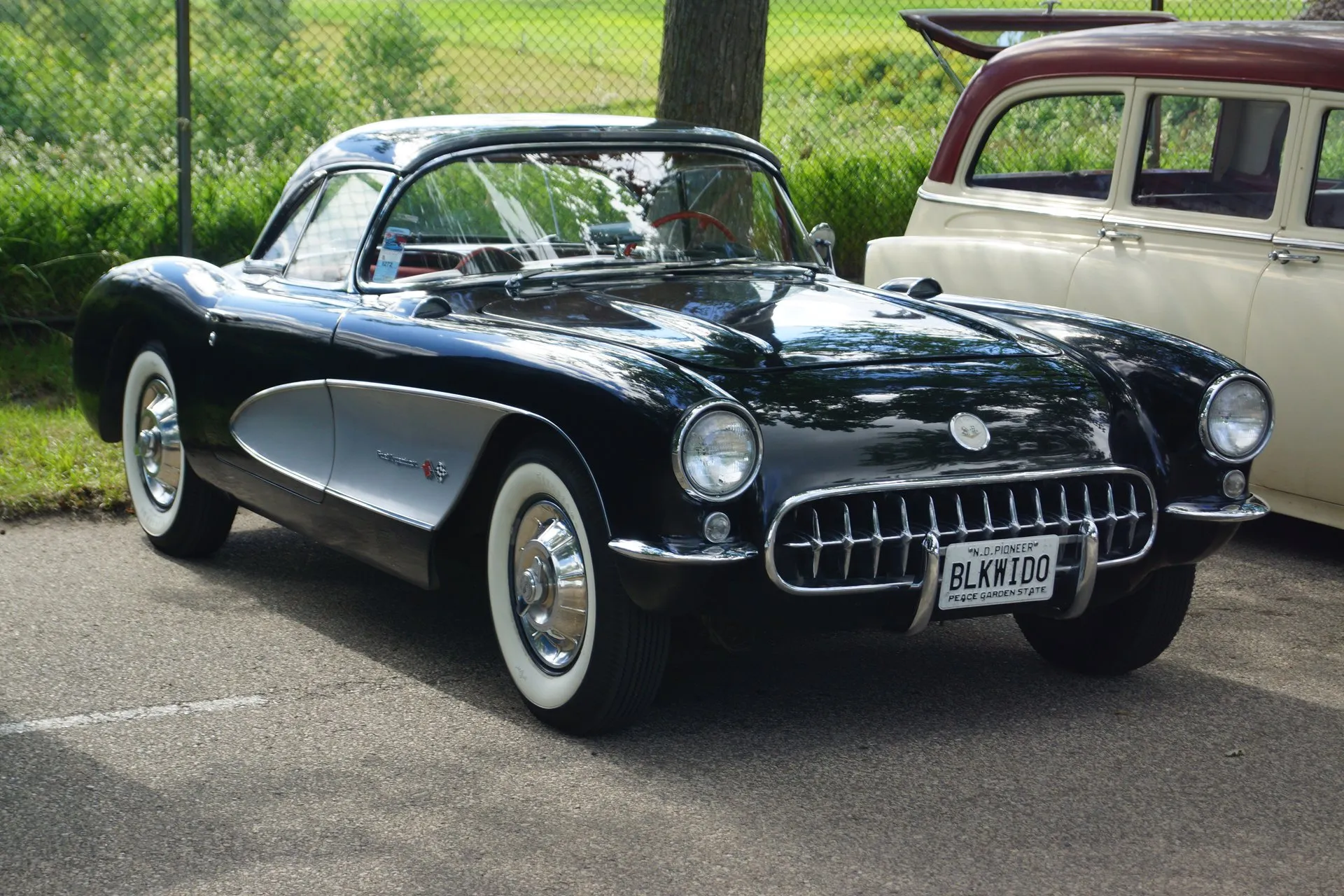
1956. The first restyle brought roll-up glass windows, outside door handles, exposed headlights and side coves that allowed two-tone paint. A factory hardtop was offered for the first time, and 2,076 cars got one. The 265 V8 was now standard at 210 hp, or 225 hp with two four-barrel carburetors; a three-speed manual was standard and the Powerglide optional.
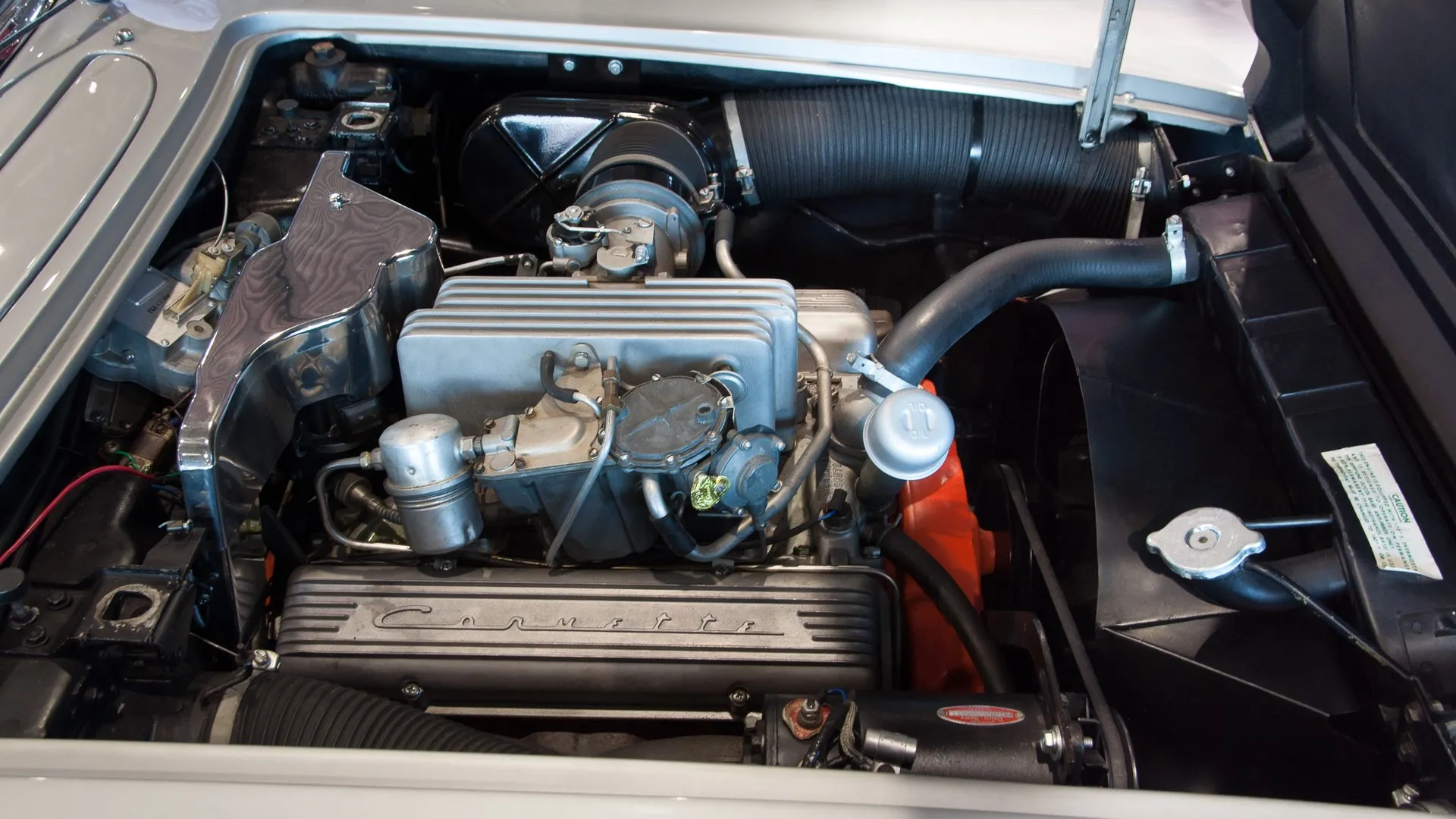
1957. The 283 arrived at 220 hp, along with Rochester mechanical fuel injection and an optional four-speed. The top engine, fuel injection with the competition camshaft, made 283 hp from 283 cubic inches. Of 6,339 built, 1,040 had fuel injection and 664 the four-speed. One owner says more 1957 fuelies exist today than were ever built.
1958–1960: quad headlights and a longer body
1958. Quad headlights, a Corvette first, plus simulated hood louvers and chrome trunk spears that lasted only this year. A new dash moved the tachometer above the steering column, seat belts were factory-installed for the first time, and the body grew from 168.0 to 177.2 inches long.
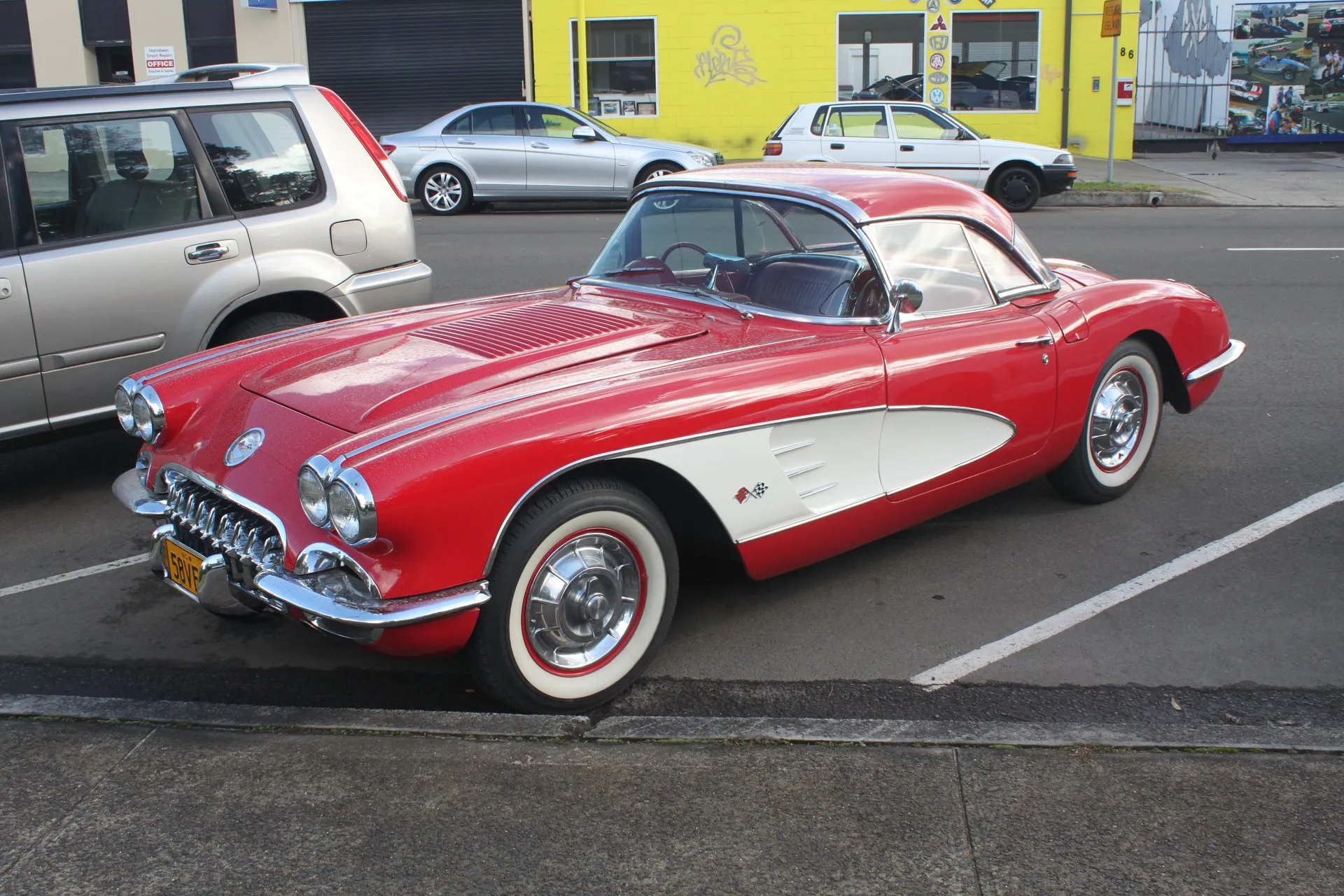
1959. The louvers and spears went, four-speeds got a T-handle shifter with a reverse lockout, and black became an interior color for the first time.
1960. Production passed 10,000 for the first time (10,261), aluminum radiators came on the 270 and 290 hp engines, and every fuel-injected 1960 had a manual transmission. It was the last year for taillights formed into rounded rear fenders and for the heavy grille teeth.
1961–1962: the ducktail and the 327
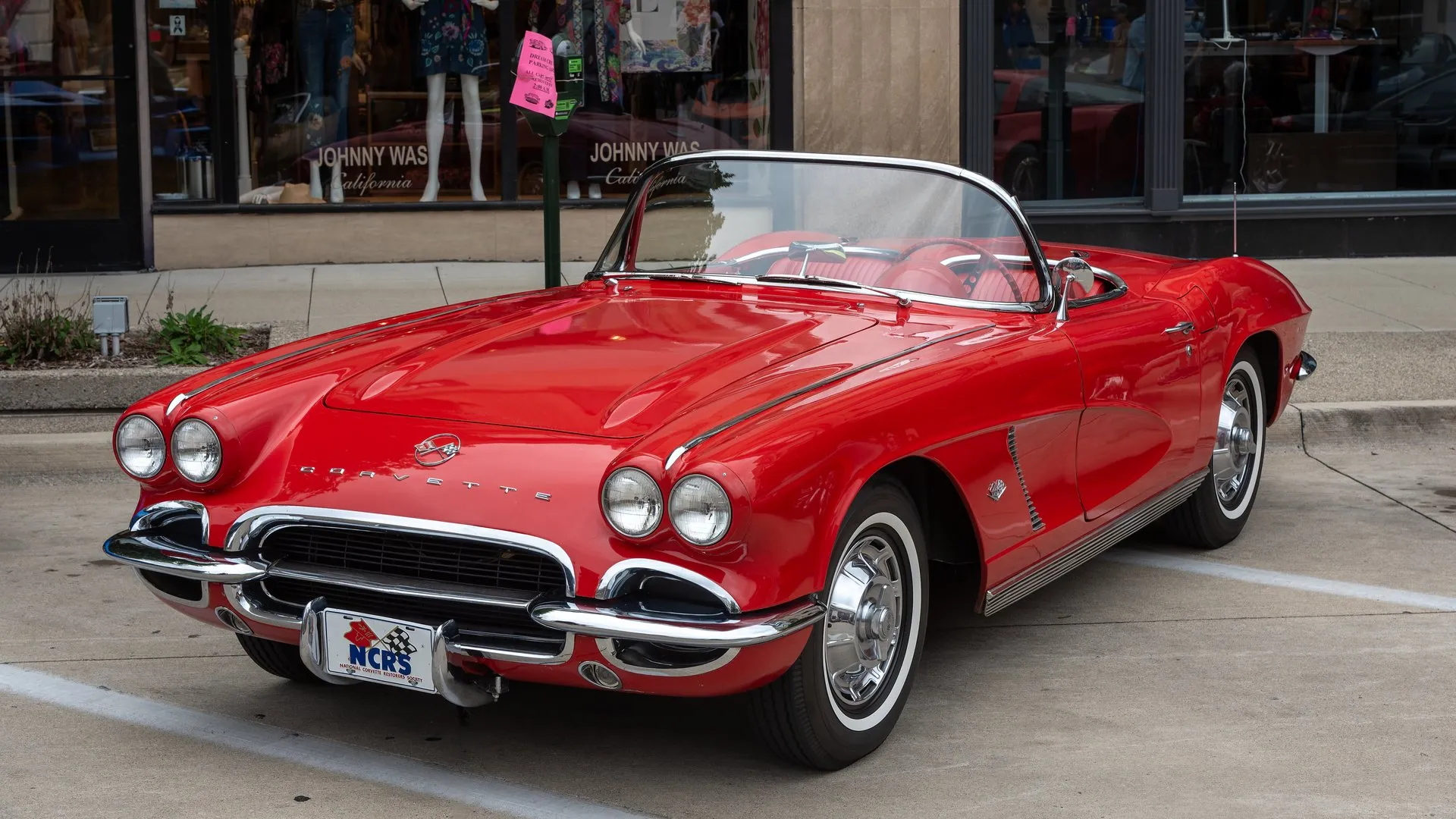
1961. A new ducktail rear with four taillights, body-color headlight bezels, exhaust exiting under the body, a transmission tunnel 20 percent narrower and an aluminum four-speed case. Fuel injection made 275 or 315 hp. It was the last year for contrasting cove colors.
1962. The 327: 250 hp base, 300 and 340 hp options, and 360 hp with fuel injection. It was the biggest C1 year, and 1,918 were fuelies. The dual four-barrels and two-tone coves were gone, and a heater became standard. The base price was $4,038, and 1962 was the last year for an opening trunk, exposed headlights and a solid rear axle.
Section 03
Known C1 problems, and why the federal records are empty
NHTSA, the US road safety agency, holds one owner complaint for all ten model years (opens in new tab): a 1960 that dripped fuel below the filler door after a top-off, filed in 2017, with no crash, fire or injury. It lists no recalls for any C1, and its service bulletin files, which start in 1995, hold no GM bulletin for these years. So the rest of this section leans on owners.
The frame and the sills
The frame is full-length and welded, with box-section rails and an I-beam X-member (GM’s 1953 data). Owners point to the rear crossmember, an open channel that traps moisture-holding dirt; one calls it “the only common area for rust” (opens in new tab) (Corvette Action Center forum, 2002). One long-time owner adds that his ex-New York 1958 rusted where the frame kicks up over the rear suspension (2003). A frame too far gone usually gets replaced: with a reproduction (see Ownership costs) or, more cheaply, one poster says, a good used frame a restomod builder has pulled (2008).
There’s no birdcage to fear. On a C3 the steel cage around the cabin is a known rust spot (see the C3 guide), but a C1 has “no steel windshield or door post inner structure”, as one owner puts it, and its windshield sits on the fiberglass (Corvette Action Center forum, 2002 and 2007).
The catch is lower down. Later C1s hide steel supports inside the rocker panels that can rust through unseen (opens in new tab). In that 2012 thread a 1962 owner says they have no drain holes; the starter, who could see his only through an inspection hole under the carpet, says the body felt “much more firm in the rear” once they were replaced. Posters there disagree about which years had steel, so check any C1.
The fiberglass body
Fiberglass doesn’t rust, but it hides history. Stress cracks are routine, two posters say (CorvetteForum, 2009), and one restorer counted “over 100” on a 1959. Look inside the body for old crash repairs: one poster has seen a 1957 wearing a 1958–1960 rear clip (Corvette Action Center forum, 2002). A complete windshield frame is costly (see Ownership costs), and one poster calls replacing a C1 windshield “not for the faint of heart” (2026).
Living with one
A stock C1 drives its age: one owner says they “drive and ride like a truck” (Corvette Action Center forum, 2002), and two posters in a 2011 thread about a 1954 agree. Owners call radial tires the key upgrade, “night and day” over bias-plies, though two older hands say a car that wanders on bias-plies usually has its alignment set for radials (CorvetteForum, 2012). Tops leak, cabins get hot, and few have air conditioning. Still, most owners in a 2011 thread drive theirs far, some on 1,000-mile round trips, and one 1955 has covered 118,000 miles since its restoration; others take a newer Corvette on long trips (2016).
Fuel injection upkeep
Owners say a Rochester unit that’s set up right is best left alone: in a thread about a rough-running 1961, one says keep it stock and another warns home mechanics off its main diaphragm (2011). Ethanol fuel and hot stop-and-go traffic don’t suit it, another owner says, and a member others call a noted specialist says a car that has sat for years needs its unit serviced before the engine is cranked (2021). One owner calls a properly rebuilt, maintained unit “usually a very trouble free system”, though he rates the first 1957 units the most challenging (CorvetteForum, 2007–2011).
Section 04
How to tell a real C1 from a good story
On a car this old, the expensive mistake isn’t a weak part. It’s paying for a car that isn’t what it claims, when the factory records that could settle it are thin.
The serial number. A short form of the serial (a VIN derivative) is stamped on top of a frame rail near the X-member, sometimes faintly; on one 1961 it hid under a body-mount rubber block (Corvette Action Center forum, 2008–2009). It should match the VIN plate and the title. Owners describe different plate locations and fastenings over the years, so check the plate against the NCRS judging guide for that year. A state-issued replacement VIN means taking “the hit on car value”, as one owner puts it (CorvetteForum, 2021).
The 1953. Its price makes its identity the one to check hardest. In one Corvette Action Center thread, two cars claimed the same 1953 serial, and posters explained how a car gets built around a reproduction tag. One, who says he has made such tags, says a new tag matching the original title and frame number is “completely legal in many states” and anything else is fraud (2009).
The engine. C1 engines were assembled at Flint, owners say, so a block from Chevrolet’s Tonawanda plant means a replacement (Corvette Action Center forum, 2007 and 2009). The stamp pad’s suffix code should fit the year and the car; GM’s kits list them, such as 1962’s RC to RF, SC and SD. NCRS deducts 38 points for a painted or obscured pad, so ask why one is hidden.
Fuel injection. It adds money, so it gets added to cars. NCRS’s own definition of counterfeiting (opens in new tab) describes exactly this: an injection unit in place of the carburetor, with numbers and a suffix code stamped on the block to look original. Owners disagree about whether a careful conversion can be caught. Four, in two CorvetteForum threads, say a fully correct one is very hard or impossible to spot; another says an experienced NCRS judge is “almost impossible to fool” on a 1962.
So owners hunt for clues, none of them proof alone: holes in the driver-side inner fender (opens in new tab) for the injection air cleaner or its fresh-air hose bracket; on a 1957, the round throttle rod, Fuel Injection emblems in the coves (or filled holes where they were) and a unit series that suits the build date; on a 1962, the high-redline tachometer that only 340 hp and fuel-injected cars got, a firewall dimple and an off-center tach-cable hole. Tachometers get swapped, so paperwork comes first; without it, one poster says, insist on NCRS judging.
Color and awards. C1s carry no trim tag, and Chevrolet didn’t code colors to individual cars, so nothing on the car proves its original color (Sports Car Market; GM’s 1962 kit). NCRS judges cars against how they left the factory (Top Flight needs 94 percent of 4,500 points), and its Award Confirmation Document Service lists a car’s judging history.
Section 05
What to check before buying a C1
- The frame, on a lift. The rear crossmember first, then the rails and the kick-up over the rear suspension.
- The serial number. Frame stamp, VIN plate and title should agree, and the plate should fit the NCRS judging guide for the year.
- The sills. On later cars, the steel rocker supports, through the inspection hole under the carpet if there is one.
- The body. Stress cracks, crash repairs inside the panels, a rear clip from another year, and the windshield frame.
- The engine. Flint-built, with a stamp and suffix code that fit the year. On a 1955 V8, the gold V and the VE serial.
- A claimed fuelie. Paperwork, then the clues in How to tell a real C1 from a good story, then an NCRS judge.
- The front end. Steering box play, king pins, tie rods, the idler and the control-arm bushings (Corvette Action Center forum, 2002).
- A car that has sat. One owner’s stored 1961 needed fluids, a tank, hoses, a fuel pump, brake parts and a cooling flush, and its injection pump was “all gummed up” (CorvetteForum, 2021).
- An inspection by someone who knows C1s.
Section 06
The best C1 years for each kind of buyer
No owner thread read for this guide argues best or worst C1 years, so these picks are this site’s call, from GM’s records and 2026 prices.
- The early look for the least money: 1954. 3,640 built, far more than 1953 and 1955 combined, at a Hagerty #3 average of $63,650 against $186,000 for a 1953. Thirteen 1954s with no modification in the listing title sold on Bring a Trailer at a $65,005 median (12 months to October 2026), and one owner calls it the easiest early year to restore (CorvetteForum, 2010–2014). It’s a six with an automatic, and it drives like one.
- The history: a documented 1957 fuelie. The first fuel injection and the first four-speed. Hagerty’s #3 values put the fuelies at $83,100 (250 hp) and $82,100 (283 hp), well above $63,300 for the 220 hp car but about level with the dual four-barrel cars ($79,000 and $82,400). The money is in the proof: buy the paperwork, then the car.
- The quad-headlight look: 1958–1960. The priciest group on Bring a Trailer, at a $73,500 median. Only a 1958 has the hood louvers and trunk spears.
- The driver: 1961–1962. The newest C1s and the lowest-priced group on Bring a Trailer at a $62,000 median. A 1962 adds the 327 and the most cars to choose from, and it’s Hagerty’s cheapest C1 year on average, at $62,600: the biggest engine in the cheapest year, which is about as Corvette as a price guide gets.
- Collectors only: the 1953. Six figures, and the most identity work.
Restomods with modern engines are a different purchase, with prices of their own (see What a C1 costs in 2026).
Section 07
What a C1 costs in 2026
Hagerty’s price guide (opens in new tab), as archived on January 23, 2026, gives these #3 (Good) condition averages. Each year’s figure is the plain average of its engine choices, not weighted by how many were built, and values may have moved since.
| Year | Hagerty #3 average, January 2026 |
|---|---|
| 1953 | $186,000 |
| 1954 | $63,650 |
| 1955 | $86,050 (six $72,200, V8 $99,900) |
| 1956 | $66,200 |
| 1957 | $77,980 |
| 1958 | $90,540 |
| 1959 | $79,860 |
| 1960 | $81,460 |
| 1961 | $80,580 |
| 1962 | $62,600 |
Hagerty’s average for the whole generation is $80,716, and its lowest figure for any C1 is $48,800, for a 1956 with the 210 hp 265.
What do C1s sell for at auction? On Bring a Trailer (opens in new tab), 122 C1s sold from October 6, 2025 to October 5, 2026 (55 more went unsold), at a median of $68,250, with the middle half between about $55,000 and $82,000. These are this site’s calculations from each listing’s sold price:
| Years | Sales | Median sold price |
|---|---|---|
| 1953–1955 | 21 | $66,500 |
| 1956–1957 | 22 | $70,000 |
| 1958–1960 | 39 | $73,500 |
| 1961–1962 | 40 | $62,000 |
32 of the 122 had a modification in the listing title, such as an engine swap or a five- or six-speed; without them, the median is $66,750. A title doesn’t prove a car is stock, so treat this as a snapshot.
What fuel injection adds. The 19 cars sold with fuel injection in the listing title, and no modern engine swap, brought a median of $82,000, from $42,000 to $127,000. The top sale was an NCRS Top Flight 1962 327/360, at $127,000 in July 2026. A 1957 with a replacement fuel-injected 283 sold for $50,000 in June 2026 and, relisted, $42,000 in July, yet a 1959 with a replacement fuel-injected engine and NCRS Top Flight awards brought $85,000 in November 2025. A replacement engine doesn’t settle the price by itself.
The extremes. The two 1953s brought $371,000 (December 2025) and $236,000 (April 2026), and a 1954 project $13,000 (September 2026). LS3-powered restomods sell in their own market: $225,000 for a 1958 (November 2025) and $193,000 for a 1960 (May 2026).
Section 08
Ownership costs
Current repair prices are scarce, so these figures, posted by owners in the forum threads listed in Sources, carry their year:
- Frame: a reproduction 1958–1960 frame, $4,295 (2008).
- Body and paint: one poster’s list put body labor at $6,750–$9,000, at $30 an hour, and paint and chrome at $3,000 and up each (2009).
- Windshield frame and tops: a complete windshield frame, $2,850 to $3,000 and up; a soft top, $2,500; a restored hardtop, up to $5,500 (2007).
- Dual master cylinder conversion: bolt-in units offered at $199 to $255 (2008).
- Fuel tank: a reproduction, about $250 (2021).
- Radials: $620 cash for wide whitewalls at an NCRS meet in January 2011 (the poster didn’t say how many).
Supply is the good news. “They repro 90% of the car,” one owner says of the early cars, though he warns a correct early engine, transmission or rear end can be harder to find (CorvetteForum, 2010–2014). The six shares most service parts with Chevrolet cars and trucks of its day (Corvette Action Center forum, 2004).
Try the cheap fix first. Before spending on the cooling system, check the timing: in a 2007 thread, a 1959 soaked up more than $2,000 in cooling repairs before a timing light found corroded advance weights in the distributor.
Tops leak, so a car kept outside needs a cover; the car cover guide covers C1 fit.
Section 09
The verdict
Buy the documented car, not the claimed one. For most buyers that means a solid 1961–1962, bought on its frame and its paperwork: the newest C1s, the cheapest group on Bring a Trailer and, in 1962’s case, the 327. The budget path is the same years with the base engine: a 1961 with the 230 hp 283 and a four-speed sold there for $43,750 in September 2026.
Skip any “fuelie” priced as one without the paperwork to prove it, any 1953 whose identity isn’t settled, and any car with a rotten frame unless the price already pays for a new one.
Get it right and you own the car where America’s sports car began: a fiberglass two-seater that went from a six-cylinder automatic to a 360 hp fuel-injected small-block in ten model years, and one that owners still take on 1,000-mile round trips. When it bowed out, the C2 (1963–1967) took over.
Section 10
Sources
- NHTSA owner complaints, 1953–1962 Chevrolet Corvette (opens in new tab) api.nhtsa.gov One query per model year, pulled 2026-10-06. This link is 1960, the only year with a record; the others are 1953 (opens in new tab), 1954 (opens in new tab), 1955 (opens in new tab), 1956 (opens in new tab), 1957 (opens in new tab), 1958 (opens in new tab), 1959 (opens in new tab), 1961 (opens in new tab) and 1962 (opens in new tab). One complaint in all ten years, filed in 2017.
- NHTSA recalls, 1953–1962 Chevrolet Corvette (opens in new tab) api.nhtsa.gov One query per model year (change modelYear), pulled 2026-10-06. No recalls listed for any year.
- NHTSA manufacturer communications (TSB) file, received 1995–1999 (opens in new tab) static.nhtsa.gov This and NHTSA's later files, through 2025–2026, hold no GM bulletin for any Corvette before the 1984 model year.
- GM Heritage Center: 1953 Corvette vehicle information kit files.zipcorvette.com AMA specification questionnaire, November 15, 1953: PDF pages 2, 3, 7, 16, 17 and 24.
- GM Heritage Center: 1954 Corvette vehicle information kit files.zipcorvette.com PDF pages 2 and 4 (reproduced Corvette Black Book pages: production, options, prices, color estimates) and 8–9 (Chevrolet Corvette supplement).
- GM Heritage Center: 1955 Corvette vehicle information kit files.zipcorvette.com PDF pages 2–3 (Black Book), 6 (AMA questionnaire, May 31, 1955) and 33 (weights).
- GM Heritage Center: 1956 Corvette vehicle information kit files.zipcorvette.com PDF pages 2 and 4 (Black Book) and 8 (AMA questionnaire).
- GM Heritage Center: 1957 Corvette vehicle information kit files.zipcorvette.com AMA questionnaire and Chevrolet supplement: PDF pages 13, 16, 22 (fuel injection), 27, 28, 30 and 32.
- GM Heritage Center: 1958 Corvette vehicle information kit files.zipcorvette.com PDF pages 4 and 6 (Black Book), 13 and 15 (Chevrolet data).
- GM Heritage Center: 1959 Corvette vehicle information kit files.zipcorvette.com PDF pages 4–5 (Black Book) and 11 (Chevrolet data).
- GM Heritage Center: 1960 Corvette vehicle information kit files.zipcorvette.com PDF pages 26 and 28 (Black Book), 7 and 11 (Chevrolet data) and 31 (AMA questionnaire, October 2, 1959).
- GM Heritage Center: 1961 Corvette vehicle information kit files.zipcorvette.com PDF pages 4–5 (Black Book), 13 and 17 (Chevrolet data).
- GM Heritage Center: 1962 Corvette vehicle information kit files.zipcorvette.com PDF pages 4 and 6 (Black Book), 15 and 19 (Chevrolet data).
- Corvette Action Center: C1 production by year (opens in new tab) corvetteactioncenter.com Year pages also used: 1953 (opens in new tab), 1957 (opens in new tab) and the others for cross-checks. Fetched 2026-10-06.
- GM News: Retro Rides, the 1953 Chevrolet Corvette (opens in new tab) news.gm.com Eric J. Savitz, October 17, 2025. Read via the Internet Archive's June 2026 copy (opens in new tab).
- GM Heritage: 1953 Chevy Corvette (opens in new tab) gm.com Read via the Internet Archive's April 2026 copy (opens in new tab).
- Sports Car Market: 1957 283/283 Fuel-Injected Convertible (opens in new tab) sportscarmarket.com Tom Glatch, January 1, 2010. 1957 production and option counts; no trim tag on C1s.
- NCRS: judging awards (opens in new tab) ncrs.org Flight judging, Top Flight, the engine pad deduction, the Award Confirmation Document Service and NCRS's definition of counterfeiting. Fetched 2026-10-06.
- Hagerty Price Guide: 1953–1962 Chevrolet Corvette (opens in new tab) web.archive.org Internet Archive copy of January 23, 2026; #3 (Good) condition averages.
- Bring a Trailer: Chevrolet Corvette C1 results (opens in new tab) bringatrailer.com 122 sales from October 6, 2025 to October 5, 2026. The medians ($68,250 overall; $66,500 for 1953–1955, $70,000 for 1956–1957, $73,500 for 1958–1960, $62,000 for 1961–1962; $82,000 for fuel-injected cars) are this site's calculation from each listing's sold price.
- classic.com: Chevrolet Corvette C1 market (opens in new tab) web.archive.org Archived February 9, 2026. The four year groups the market splits C1s into.
- Corvette Action Center thread: known bad spots on C1 frames (opens in new tab) forums.corvetteactioncenter.com August 2003.
- Corvette Action Center thread: looking for advice on a 1958 frame (opens in new tab) forums.corvetteactioncenter.com 2010–2013.
- Corvette Action Center thread: a rotted 1959 frame (opens in new tab) forums.corvetteactioncenter.com July 2008. Owner-reported price.
- CorvetteForum thread: C1 rusted rocker panel support (opens in new tab) corvetteforum.com April to May 2012.
- Corvette Action Center thread: buying a 1957 (opens in new tab) forums.corvetteactioncenter.com October 2002 to January 2003.
- CorvetteForum thread: C1 bodywork man hours (opens in new tab) corvetteforum.com August 2009. Owner-reported prices and hours.
- CorvetteForum thread: a 1954 without its engine, restore or restomod (opens in new tab) corvetteforum.com August 2011.
- CorvetteForum thread: 1955 six-cylinder serial numbers (opens in new tab) corvetteforum.com 2010–2021.
- Corvette Action Center thread: the first V8 Corvette (opens in new tab) forums.corvetteactioncenter.com December 2003.
- Corvette Action Center thread: a 1953 recovered (opens in new tab) forums.corvetteactioncenter.com September 2004.
- CorvetteForum thread: 1954 Corvette parts resources (opens in new tab) corvetteforum.com 2010–2014.
- CorvetteForum thread: how to spot a fake 1962 fuel-injected car (opens in new tab) corvetteforum.com April 2011.
- CorvetteForum thread: is a 1957 a real fuelie or not (opens in new tab) corvetteforum.com 2007–2011.
- CorvetteForum thread: a 1961 fuelie suddenly running rough (opens in new tab) corvetteforum.com October 2011.
- CorvetteForum thread: putting the fuel injection back on a 1960 (opens in new tab) corvetteforum.com August 2011.
- CorvetteForum thread: an abandoned 1961 fuel-injected garage find (opens in new tab) corvetteforum.com May 2021. Owner-reported price.
- Corvette Action Center thread: barn find block numbers (opens in new tab) forums.corvetteactioncenter.com February to May 2007.
- Corvette Action Center thread: VIN location on the frame (opens in new tab) forums.corvetteactioncenter.com December 2008 to April 2009.
- CorvetteForum thread: a fake C1 (opens in new tab) corvetteforum.com May to June 2021.
- Corvette Action Center thread: two cars, one 1953 serial (opens in new tab) forums.corvetteactioncenter.com October 2009.
- Vette Registry thread: tracing a 1959 (opens in new tab) vetteregistry.net April 2026.
- CorvetteForum thread: C1s and C2s for under $50K (opens in new tab) corvetteforum.com June to October 2026.
- CorvetteForum thread: C1 driving in the real world (opens in new tab) corvetteforum.com March 2011.
- CorvetteForum thread: how bias-ply tires affect handling (opens in new tab) corvetteforum.com January 2012. Owner-reported price.
- CorvetteForum thread: the lack of C1s at car shows (opens in new tab) corvetteforum.com July 2016.
- Corvette Action Center thread: C1 cooling and heating (opens in new tab) forums.corvetteactioncenter.com September to October 2007. Owner-reported price.
- Corvette Action Center thread: C1 windshield frame (opens in new tab) forums.corvetteactioncenter.com June 2007. Owner-reported prices.
- CorvetteForum thread: C1 dual master cylinder (opens in new tab) corvetteforum.com October to November 2008. Asking prices.