C5 · Buying guide
C5 Corvette years to avoid, and the best years to buy
Published
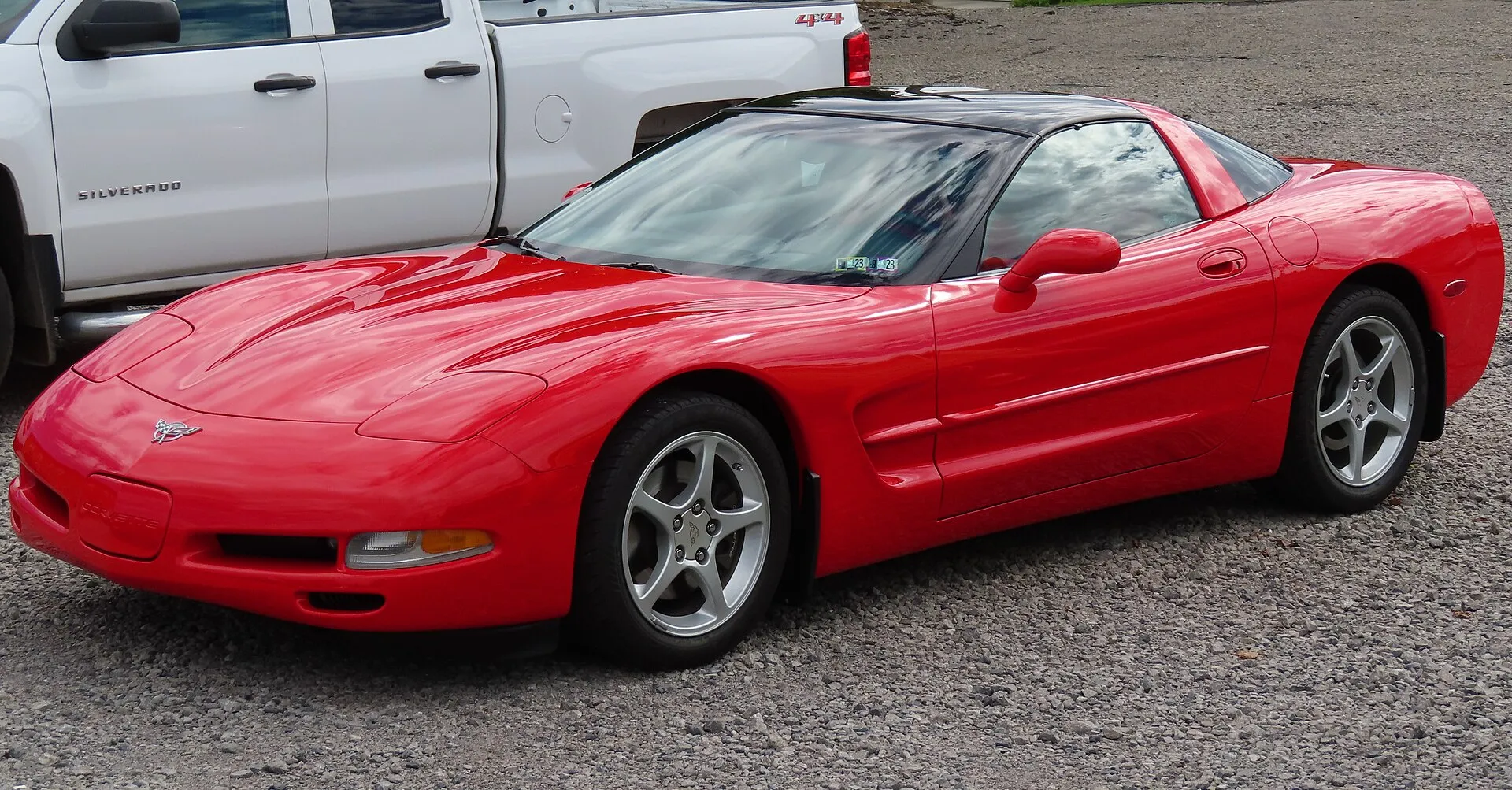
Much of what goes wrong on a C5 (1997–2004) Corvette comes down to its model year: first-year bugs on the 1997, a hard-to-repair brake computer on 1997–2000 cars, oil use on some 2001s, and leaking fuel tank connectors on 2004s from one five-month stretch of production. None of it rules a year out. GM built 248,715 C5s over eight model years, all with at least 345 hp, and even the later, better-sorted cars are within reach: CorvetteForum’s editors put a low- to moderate-mile 2001–2004 six-speed with records at $25,000–$40,000 in 2026. The ranking in this guide uses NHTSA complaints, recalls, GM bulletins and owner consensus. Specs and prices are in the C5 buyer’s guide.
- Best years: 2002 and 2003. Shop these first. They have the fewest NHTSA complaints per car built (opens in new tab) (2003 the fewest of all, by this site’s count), the 350 hp LS1 and a brake module that can usually be rebuilt.
- Years to avoid: a 1997 or 1998 unless the price reflects the record (the two highest complaint rates, and five recalls on the 1997); a 2004 inside GM’s fuel tank VIN range without proof the tank was replaced; and any 1997–2000 car with its ABS and traction warnings lit, priced as if they weren’t.
- Z06: a 2002 or 2003 Z06 needs proof of new valve springs, or a price that covers them.
- Reliability: mechanically sound. Owners report LS1s going past 150,000 miles, and the known faults are mostly electronics and aging parts.
Section 01
Best and worst C5 years, by the numbers
| Year | Built | NHTSA complaints | Per 1,000 built | Per 1,000, column lock left out | GM recalls | Verdict |
|---|---|---|---|---|---|---|
| 1997 | 9,752 | 153 | 15.7 | 9.7 | 5 | Approach with care: first-year car |
| 1998 | 31,084 | 399 | 12.8 | 8.3 | 2 | Approach with care: column lock peak, early brake module |
| 1999 | 33,270 | 308 | 9.3 | 5.4 | 2 | Budget pick: check the brake module |
| 2000 | 33,682 | 277 | 8.2 | 4.7 | 2 | Budget pick: check the brake module |
| 2001 | 35,627 | 203 | 5.7 | 4.1 | 1 | Buy: check oil use and wheels |
| 2002 | 35,767 | 170 | 4.8 | 3.7 | 1 | Buy: check the wheels |
| 2003 | 35,469 | 112 | 3.2 | 2.7 | 1 | Buy: the cleanest record |
| 2004 | 34,064 | 217 | 6.4 | 5.8 | 2 | Buy after a VIN check: fuel tanks |
Complaints are distinct NHTSA complaint numbers, pulled and re-checked September 26–27, 2026. Production figures are Bowling Green’s, from Corvette Action Center, and recalls are NHTSA’s records; every year’s query and page is listed in Sources. “Per 1,000 built” is this site’s own rough rate, not an NHTSA figure: complaints are voluntary, older cars have had longer to collect them, and publicity pulls them in, so read it as a ranking. The column lock runs through every year (see Problems that don’t care about the year), so the second rate leaves out the 577 complaints that mention it. Every year also lists two aftermarket lamp recalls, not counted here. GM’s bulletins mostly cover the whole run, so they don’t rank the years; the ones that matter are cited where they apply. How the site sources its facts is on the about page.
Owners mostly land where the data does. The usual answer on CorvetteForum and LS1Tech, from 2006 to 2022, is 2001–2004. Two groups dissent, both in a 2013–2014 CorvetteForum thread. Several 1999 owners call theirs the best-sorted early car, and a few posters pick a 2001–2004 automatic to sidestep column lock and brake module trouble. And thread after thread says condition and records matter more than model year.
Section 02
1997–2000: the early cars
1997 is the first-year car, coupe only, with 9,752 built. It has the run’s highest complaint rate, still 9.7 per 1,000 with the column lock left out, and five GM recalls (opens in new tab): three of its own (rear suspension tie rods that could fracture, front seat belts that failed a federal crash standard, a fuel tank sender seal that could leak) plus two it shares with later years. Owners on LS1Tech describe first-year bugs that later cars shed.
1998 brings the convertible and optional Active Handling (GM’s stability control system). The column lock peaks: 142 of its 399 complaints mention it, the most of any year.
Owners rate 1999 and 2000 the best of the early cars. The hardtop joined for 1999, with the head-up display and a telescoping steering column on the options list. With the column lock left out, their complaint rates (5.4 and 4.7 per 1,000) sit not far above a 2001’s 4.1. They’re also the budget ticket in: CorvetteForum’s editors put higher-mile 1997–2000 automatics at $15,000–$22,000 in 2026.
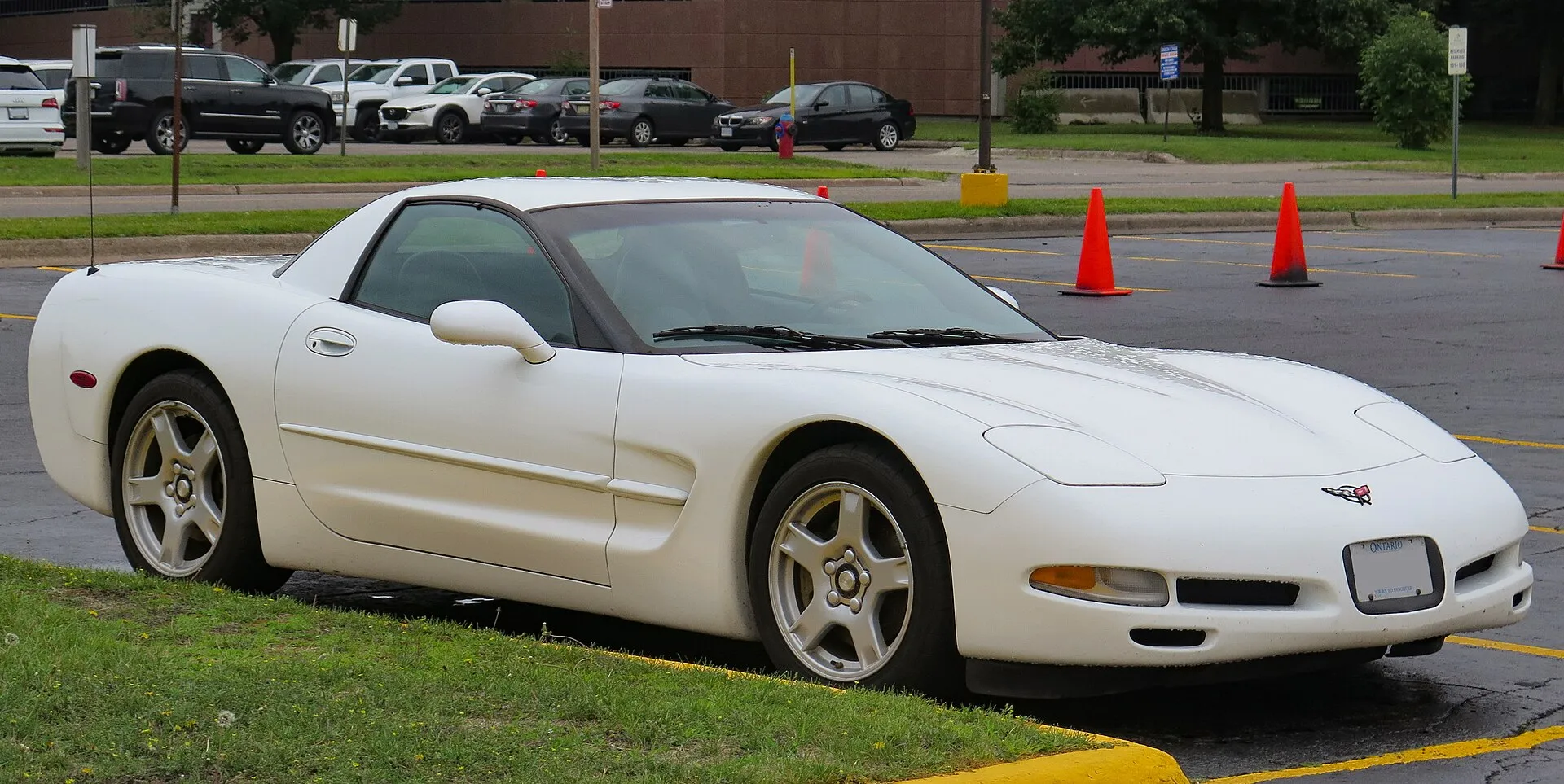
The catch is the brake module. The EBCM (electronic brake control module) runs the ABS and traction control, and a failure lights both warnings. The early unit’s circuit board is potted, sealed in epoxy, which makes repair impractical (opens in new tab), while most 2001–2004 units can be rebuilt. That’s a repair-cost risk, not proof the early modules fail more often; owners argue both ways. Most NHTSA complaints that call the module discontinued or unrepairable are on 1998–2000 cars, by this site’s count.
If an early module dies, there are three ways out:
- A used module ran over $1,000 in 2021, by CorvetteForum posters’ accounts, with no promise it will last.
- A conversion to the 2001–2004 module and pump worked for one 1999 owner, but it’s a big job: bracket, wiring, brake lines, sensors, and a Tech 2 scan tool (GM’s dealer tool) to bleed the brakes.
- A mail-in repair. ABSFixer lists one for 1997–2000 modules, but only for trouble codes C1242 and C1243, at $750 as of September 2026. That’s the repairer’s own claim: no independent report of results turned up, and a 2024 CorvetteForum poster still says early units can’t be fixed.
One 2014 post on Corvette Action Center has a rebuilder taking 2000 modules but not a 1999; nearly every other source groups 2000 with the earlier cars.
Section 03
2001–2003: the years to shop first
For 2001 the LS1 went from 345 hp and 350 lb-ft to 350 hp, with 375 lb-ft on manuals and 360 on automatics (opens in new tab), and Active Handling became standard. More torque and standard stability control: of course you want the later car. The brake module can usually be rebuilt, though a 2002 owner in each of two CorvetteForum threads, from 2021 and 2024, had one that couldn’t be.
2001: check the oil use. About 15 of the 203 complaints on 2001 cars describe oil consumption, filed while the cars were new; no other year has more than two. GM bulletins 061000 (1997–2001), 010601023 (1999–2001) and its update 010601023A (1999–2002) cover higher-than-expected oil use, and owners on LS1Tech single out 2001. A 2001 with normal oil use belongs on the shortlist.
2001–2002: look at the wheels. About 30 complaints on 2002 cars and 15 on 2001s describe cracked or bent wheels, by this site’s count. GM bulletin 0703100003 (2007) says to inspect 2000–2004 wheels for irregularities at the base of the spokes and replace them if needed.
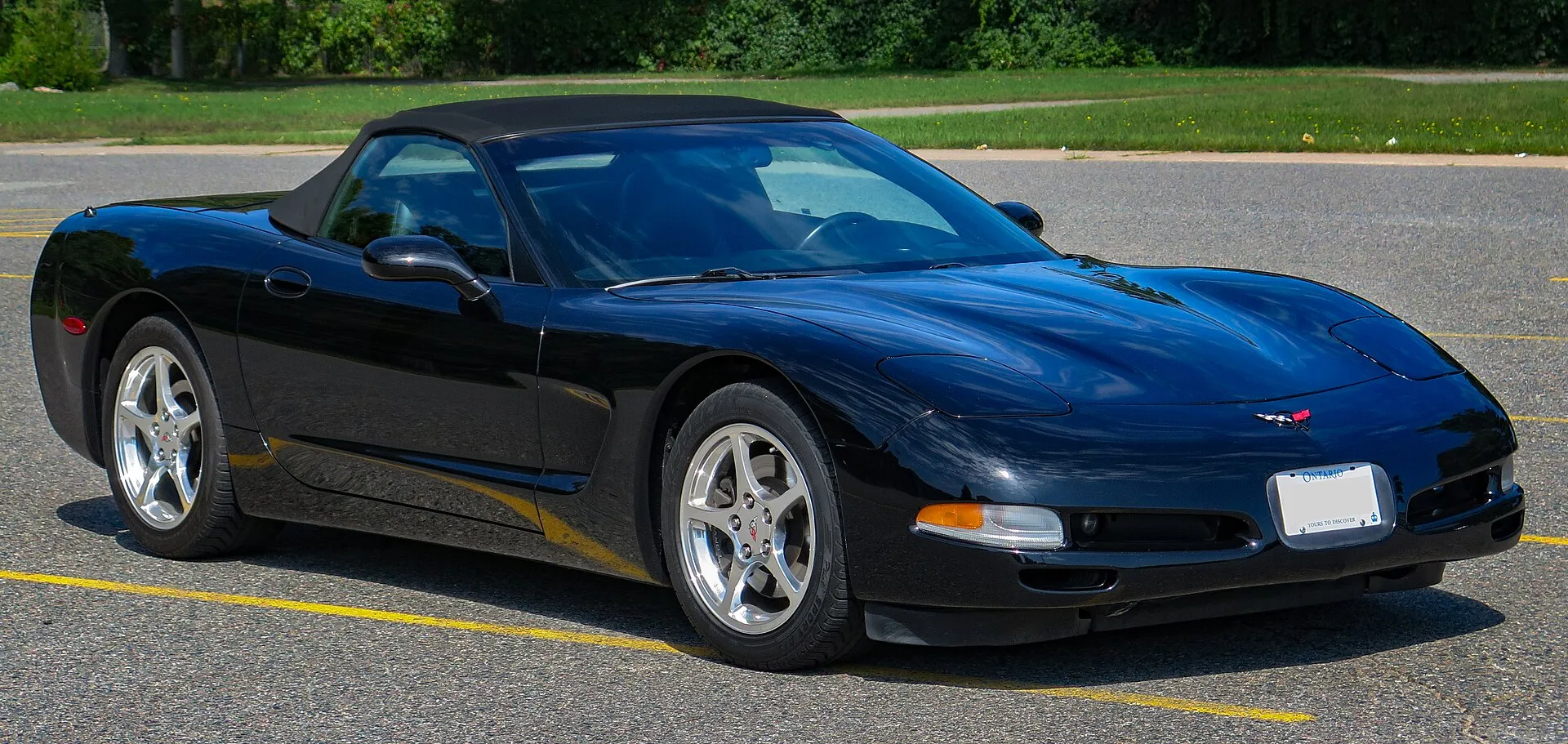
2003: the cleanest record, and one costly option. 2003 is the year Magnetic Selective Ride Control arrived as an option: electronically adjusted shocks, GM option code F55. One owner put a replacement shock at about $1,000 each in 2022, and genuine GM units were hard to find by 2025. Several owners had the system switched off with a Tech 2 and fitted conventional shocks. Partway through 2003, GM also moved to a new fuel tank system (bulletin 021903) whose twist-lock connectors can crack, so give a later-build 2003 the same fuel-smell test as a 2004.
Section 04
2004: check the VIN before you buy
The last C5 year brought the Commemorative Editions, and it’s the only year where steering isn’t the top complaint area: more than 100 of its 217 complaints describe fuel leaks or fuel smell. NHTSA opened an investigation in May 2010 and closed it that September with 268 complaints and 2,222 warranty claims (opens in new tab) on record, and no crashes, fires or injuries. GM traced the leaks to cracks at the quick connector on the crossover tube between the two tanks, or at its weld to the tank, in cars built from about October 22, 2003 to March 19, 2004.
GM’s Special Coverage Adjustment 10150 (opens in new tab) (August 2010) covered 2004s with VINs ending 45110258 through 45125500 for 10 years or 100,000 miles from the date the car went into service. Every 2004 is past that now. GM’s owner letter lists the signs: fuel smell while refueling, driving or parked, drips, and possibly a check engine light.
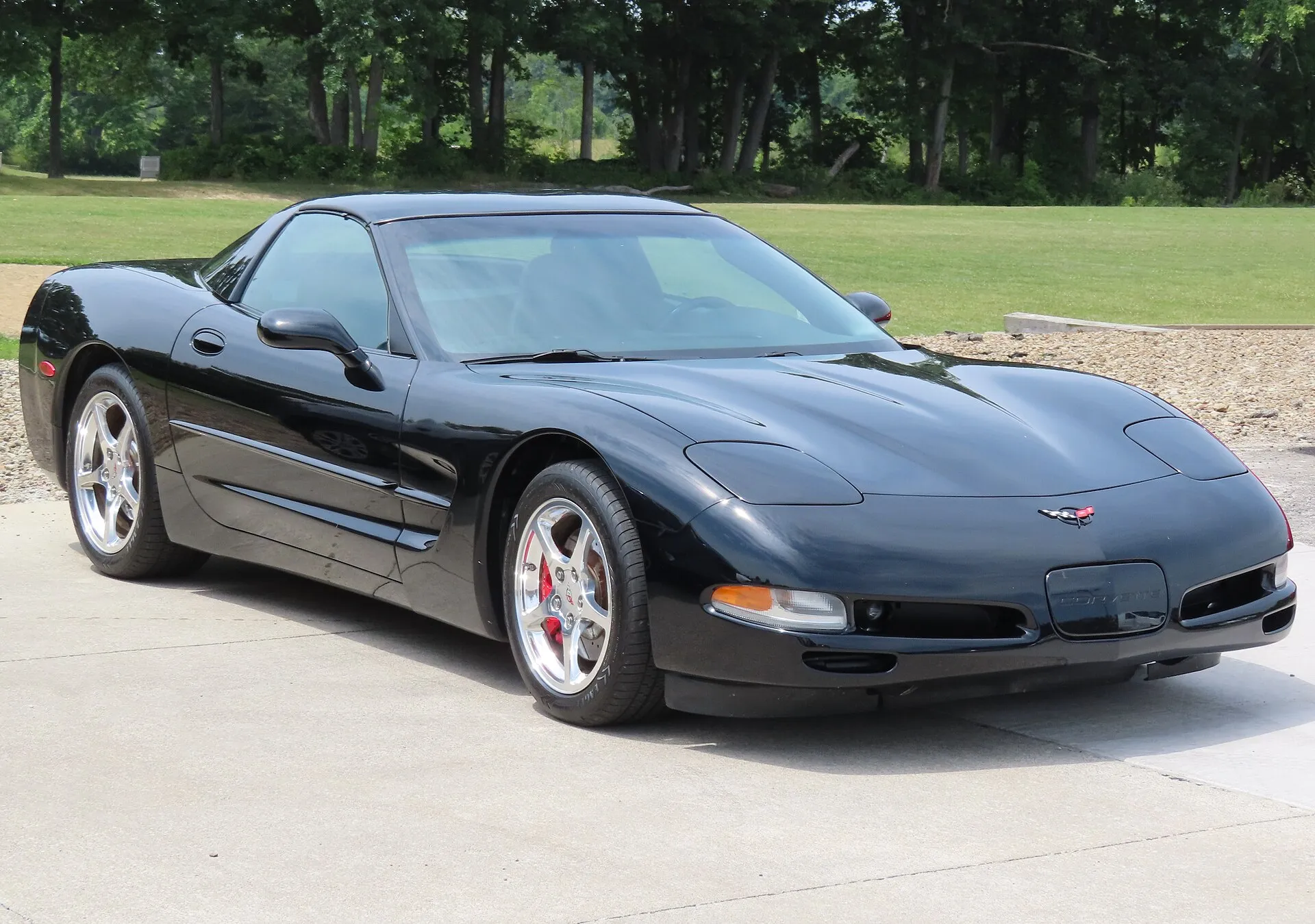
Owners split on the risk today. One poster in a 2022 CorvetteForum thread says an in-range car with no repair record will leak and the only question is when; others in the same thread say any car that was going to fail would have by now. The record says otherwise: 2004 fuel complaints were still reaching NHTSA in 2024.
So read the VIN. One owner’s advice is a late-build 2004, built after the window. Inside the range, ask for paperwork showing the tank was replaced, or price the job in: owners reported $1,800–$2,350 in 2009 and about $4,000 in 2022, so get a current quote. Certain 2004s are also in recall 04V273000 for lower control arm ball stud nut washers that could fracture; ask for proof it was done. Settle those two and the last of the line is a sound buy.
Section 05
The Z06 exception: valve springs
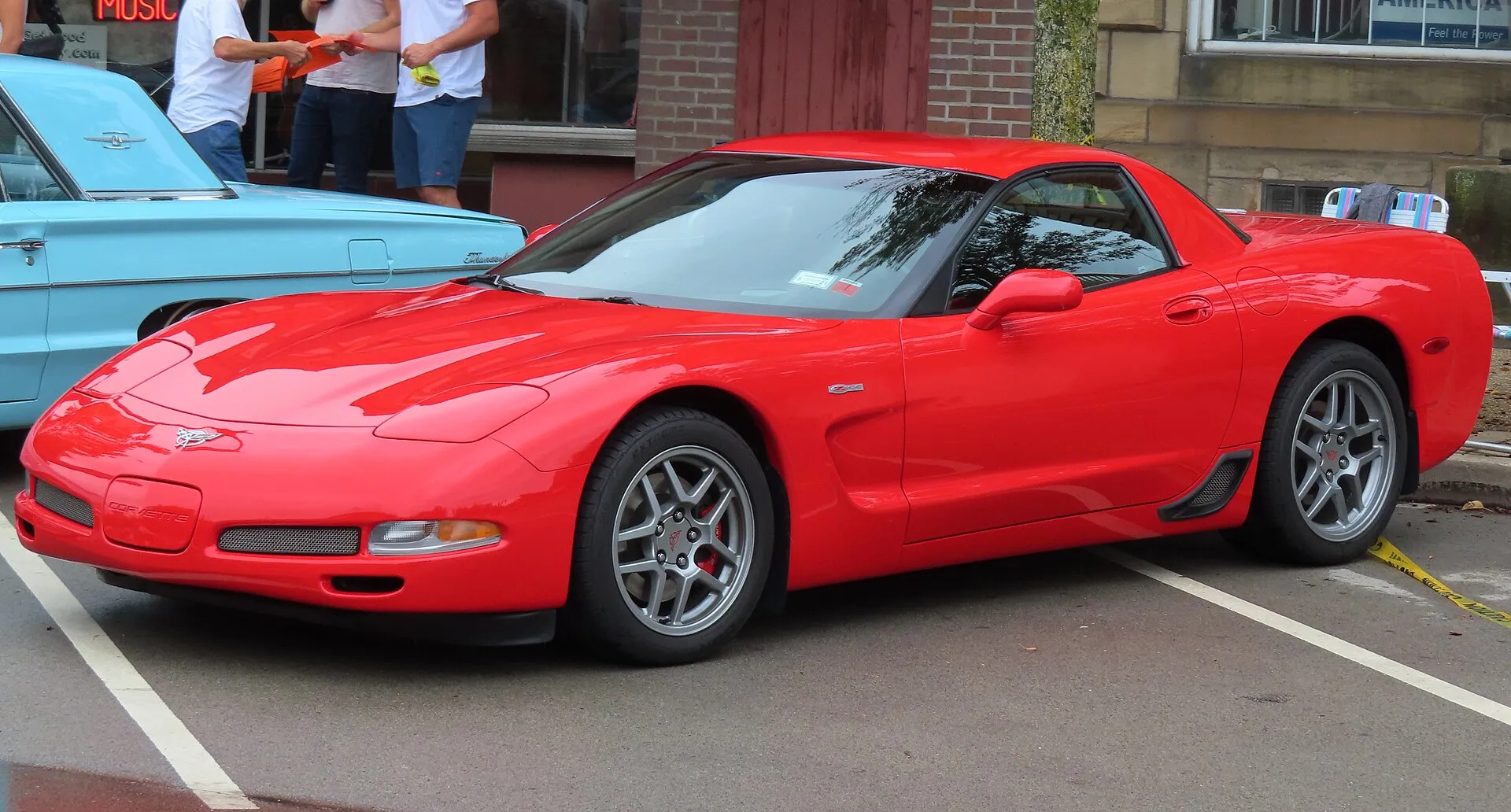
The Z06 (2001–2004) is the C5 for the buyer who wants more, and of course plenty do. It has its own engine, the LS6, rated at 385 hp in 2001 and 405 hp from 2002. Its known weak spot is the valve springs on 2002 and 2003 cars, covered in full in the C5 Z06 buyer’s guide.
- Owner data. A CorvetteForum member’s study of failures (opens in new tab) reported on CorvetteForum and Z06Vette, started in 2012 and last updated in 2025, counts 177: 6 on 2001s, 98 on 2002s, 67 on 2003s and 6 on 2004s. By the study’s own VIN cut points, late-2002 builds (last five VIN digits above 20000) and early-2003 builds (below 09000) were about 17 times as likely to report a failure as a 2001 or 2004, early 2002s about 6 times and late 2003s more than 3 times. It’s self-reported forum data: a pattern, not a failure rate.
- Other records. A 2008 owner poll found failures on 2002 and 2003 builds, and four NHTSA complaints on 2002 and 2003 cars describe spring failures. This site’s search of NHTSA’s GM bulletin files from 1995 to 2024, and its recall records, turned up no GM bulletin, recall or special policy on LS6 valve springs.
- The fix is new springs. One 2014 poster budgeted about $400 off the price for the job, and owners suggest new pushrods at the same time. Get a current quote.
Springs are a price point, not a deal-breaker: no receipt, take the job off the asking price. Then picture your first track day on fresh springs, with the Porsche behind you wondering what just happened.
Section 06
Problems that don’t care about the year
The column lock. The electronic column lock locks the steering when the key comes out, and it’s the C5’s signature fault: 577 of the 1,839 NHTSA complaints mention it, from 142 on 1998 cars to 16 and 18 on 2003 and 2004 cars. NHTSA’s investigation into columns locking while the car was moving, EA02-031, counted 2,761 complaints, 45 crashes or fires, 20 injuries and 29,727 warranty claims before GM’s 2004 recall, 04V060000 (opens in new tab). The recall covered 1997–2004 manuals, 1997–2000 automatics and European-export 2001–2004 automatics, not US 2001–2004 automatics, and GM’s follow-up Special Policy 05081 ended in February 2008. Owners on LS1Tech and CorvetteForum still report repeat failures and fit bypass modules. On any year, ask what was done and by whom, and have a Chevrolet dealer check the VIN for open recall work.
Harmonic balancer. The pulley on the nose of the crankshaft has a rubber layer between hub and ring that fails with age, and owners expect to replace one. A slight wobble can be an illusion; an index mark across hub and ring shows real slippage.
Fuel gauge. Gauges that read empty with fuel aboard are common. Owners report that repeated doses of fuel-system cleaner fix many, and a new sender the rest.
Driver’s seat. Bolster wear can start early, and GM bulletin 990850010 covers premature wear on 1997–1999 cars built before VIN X5116322.
Headlight motors. Grinding means a stripped gear, and owners fix it with a gear kit.
Smaller items. Owners list oil pressure sensors, a dim climate control display, window regulators and leaking batteries. The Corvette battery guide covers what a C5 battery leak can damage.
Parts. Owners warned in 2019 that parts for early cars were getting harder to find, and the 1997–2000 brake module is no longer made.
Section 07
C5 reliability: durable engines, aging electronics
Mechanically, the C5 is a reliable car, and owners have the odometers to show it. There’s no GM durability figure to quote, but owners report LS1s going past 150,000 miles, a 1997 at about 146,000, and a C5 at 177,000 whose owner replaced main seals, a balancer, an EBCM and rear wheel bearings along the way. A 2000 owner says his engine needed only oil changes to 104,000 miles. All of these are owners’ own reports.
Across the NHTSA records, 1,839 complaints cover 248,715 cars, about a third of them about the column lock. By complaints per car built, the most reliable year is 2003 and the least is 1997. Outside the 2001 oil use and the Z06 springs, the recurring failures are electronics and aging parts, not the engine’s internals. The part that makes a C5 fast is the part that lasts.
Prices, and why C5s sell for so little, are in the C5 buyer’s guide.
Section 08
What to check on any C5, by year
- VIN and build month, every year. The label at the driver’s door shows the month and year the car was built, as federal rule 49 CFR 567.4 requires. A 2004 needs its VIN checked against GM’s tank range, and a 2002–2003 Z06 against the spring study’s cut points.
- Column lock history, every year. What was done, and who fitted any bypass.
- ABS and traction warnings, 1997–2000. They should go out after start and stay out. Ask whether the brake module was ever replaced.
- Driver’s seat bolster, 1997–1999.
- Oil use, 2001. Ask how much it takes between changes.
- Wheels, 2000–2004, especially 2001–2002: look for cracks at the base of each spoke.
- Magnetic Selective Ride, 2003–2004. Working, original or deleted, and priced to match.
- Fuel smell, later-build 2003 and 2004. Sniff after a fill-up, and ask for tank paperwork on an in-range 2004.
- Valve spring receipt, 2002–2003 Z06.
- A pre-purchase inspection by a shop that knows C5s, as owners advise.
The C5 buyer’s guide has the full inspection list.
Section 09
The verdict
Buy a 2002 or 2003 coupe or convertible with service records and a known column lock history. That’s the pick, and the record backs it: the lowest complaint rates, the 350 hp LS1, standard Active Handling and a brake module that can usually be rebuilt. A 2001 joins them once its oil use checks out, and a 2004 once its VIN is outside GM’s range or the tank paperwork is in the folder.
The budget path is a 1999 or 2000 with a healthy EBCM. The cheap way works fine as long as the warning lights stay dark and the price leaves room for a module if they don’t. Skip a 1997 or 1998 unless the price makes up for the record and it’s the car you want.
Year matters less than the car. A documented 1999 beats a neglected 2003, and no C5 year is a write-off; some just come with homework. Do the homework, and any of the eight years can hand you the keys to America’s sports car. For a Z06, start with the C5 Z06 buyer’s guide.
Section 10
Sources
- NHTSA owner complaints, 1997–2004 Chevrolet Corvette (opens in new tab) api.nhtsa.gov One query per model year, pulled 2026-09-26 and re-checked 2026-09-27. This link is 1997; the others are 1998 (opens in new tab), 1999 (opens in new tab), 2000 (opens in new tab), 2001 (opens in new tab), 2002 (opens in new tab), 2003 (opens in new tab) and 2004 (opens in new tab). Counts are distinct complaint numbers. Rates per 1,000 built, the column lock count and the counts by topic (oil use, wheels, fuel leaks, brake module, valve springs) are this site's calculations from the complaint records and their text.
- NHTSA recalls, 1997–2004 Chevrolet Corvette (opens in new tab) api.nhtsa.gov One query per model year. This link is 1997; the others are 1998 (opens in new tab), 1999 (opens in new tab), 2000 (opens in new tab), 2001 (opens in new tab), 2002 (opens in new tab), 2003 (opens in new tab) and 2004 (opens in new tab). GM recalls 97V044000, 97V104000 and 97V105000 (1997 only), 00V111000 (1997–2000), 04V060000 (every year) and 04V273000 (2004). Every year also lists two aftermarket lamp recalls, 09E025000 and 09E012000.
- NHTSA recall 04V060000 (GM 04006): electronic column lock (opens in new tab) api.nhtsa.gov 1997–2004 model years.
- NHTSA investigation EA02-031, steering column lockup: closing resume (opens in new tab) static.nhtsa.gov March 11, 2004. Complaint, crash, injury and warranty claim totals before recall 04V060000.
- NHTSA investigation PE10-015, 2004 Corvette fuel tank leak: opening resume (opens in new tab) static.nhtsa.gov May 12, 2010.
- NHTSA investigation PE10-015, 2004 Corvette fuel tank leak: closing resume (opens in new tab) static.nhtsa.gov September 10, 2010. 268 complaints, 2,222 warranty claims, the cause GM found and GM's build window, about October 22, 2003 to March 19, 2004.
- GM bulletin 10150: Special Coverage Adjustment, fuel tank quick connector leak (opens in new tab) static.nhtsa.gov August 13, 2010, from NHTSA's PE10-015 file. 2004 Corvette VIN range 45110258 through 45125500; coverage for 10 years or 100,000 miles.
- GM owner letter, Special Coverage Adjustment 10150 (opens in new tab) static.nhtsa.gov Via NHTSA. The symptoms owners were told to watch for.
- GM recall bulletin GMP04-112 (04006A): electronic column lock, July 2004 (opens in new tab) corvetteactioncenter.com Via Corvette Action Center. Recall population by transmission and market.
- CorvetteForum, C5 Tech: Recall 04006 and you (opens in new tab) corvetteforum.com 2007–2013. Carries the reposted text of GM Special Policy 05081 and its end date.
- NHTSA manufacturer communications (TSB) file, received 1995–1999 (opens in new tab) static.nhtsa.gov Filtered to Chevrolet Corvette 1997–2004. GM bulletin 990850010 (seat bolster wear). Searched with the five files below for any GM item on LS6 valve springs: none found in any of the six.
- NHTSA manufacturer communications (TSB) file, received 2000–2004 (opens in new tab) static.nhtsa.gov Filtered to Chevrolet Corvette 1997–2004. GM bulletins 061000, 010601023, 010601023A and 021903.
- NHTSA manufacturer communications (TSB) file, received 2005–2009 (opens in new tab) static.nhtsa.gov Filtered to Chevrolet Corvette 1997–2004. GM bulletin 0703100003 (wheels).
- NHTSA manufacturer communications (TSB) file, received 2010–2014 (opens in new tab) static.nhtsa.gov Filtered to Chevrolet Corvette 1997–2004. Searched for LS6 valve spring items.
- NHTSA manufacturer communications (TSB) file, received 2015–2019 (opens in new tab) static.nhtsa.gov Filtered to Chevrolet Corvette 1997–2004. Searched for LS6 valve spring items.
- NHTSA manufacturer communications (TSB) file, received 2020–2024 (opens in new tab) static.nhtsa.gov Filtered to Chevrolet Corvette 1997–2004. Searched for LS6 valve spring items.
- 49 CFR 567.4, vehicle certification label requirements (eCFR) (opens in new tab) ecfr.gov Month and year of manufacture on a label at the driver's door.
- Corvette Action Center production data, 1997–2004 (opens in new tab) corvetteactioncenter.com Bowling Green production figures by year. This link is 1997; the others are 1998 (opens in new tab), 1999 (opens in new tab), 2000 (opens in new tab), 2001 (opens in new tab), 2002 (opens in new tab), 2003 (opens in new tab) and 2004 (opens in new tab). The 248,715 total adds the eight years. The 1998 and 1999 pages also list option production: Active Handling first in 1998, the head-up display and telescoping column first in 1999.
- GM press release: 1998 Corvette convertible pricing, August 5, 1997 (opens in new tab) corvetteactioncenter.com Via Corvette Action Center.
- GM press release: 1998 Corvette Active Handling, November 6, 1997 (opens in new tab) corvetteactioncenter.com Via Corvette Action Center.
- GM press release: 1999 Corvette hardtop, September 17, 1998 (opens in new tab) corvetteactioncenter.com Via Corvette Action Center.
- GM 1999 Corvette specifications, June 1998 (opens in new tab) corvetteactioncenter.com Chevrolet Motor Division spec sheet, via Corvette Action Center.
- GM press release: 2001 Corvette pricing, July 1, 2000 (opens in new tab) corvetteactioncenter.com Via Corvette Action Center.
- GM 2001 Corvette powertrain information (opens in new tab) corvetteactioncenter.com Via Corvette Action Center.
- GM 2002 Corvette press information (opens in new tab) corvetteactioncenter.com Via Corvette Action Center.
- GM press release: 2003 Corvette 50th Anniversary, April 10, 2002 (opens in new tab) corvetteactioncenter.com Via Corvette Action Center.
- GM press release: 2004 Corvette Commemorative Editions, April 24, 2003 (opens in new tab) corvetteactioncenter.com Via Corvette Action Center.
- CorvetteForum: Buyer's guide pricing for every Corvette generation in 2026 (opens in new tab) corvetteforum.com July 6, 2026. The C5 tiers used here: $15,000–$22,000 for higher-mile 1997–2000 automatics and $25,000–$40,000 for low- to moderate-mile 2001–2004 six-speeds with records. The editors' ranges; no data published with them.
- ABSFixer: 1997–2000 Corvette module and BPMV repair (opens in new tab) absfixer.com The repairer's own listing, read 2026-09-27: trouble codes C1242 and C1243 only, $750. No independent report of results was found.
- CorvetteForum thread: what years to avoid (opens in new tab) corvetteforum.com April 2022.
- CorvetteForum thread: which year C5 is the most reliable (opens in new tab) corvetteforum.com February 2013 to November 2014 (pages 1 to 4).
- CorvetteForum thread: are C5 Corvettes reliable, 8 years of ownership (opens in new tab) corvetteforum.com July 2021 to April 2022 (pages 1 and 2). Owner-reported mileages and repairs.
- CorvetteForum thread: C6 vs C5 reliability (opens in new tab) corvetteforum.com February to March 2019 (pages 1 and 2).
- CorvetteForum thread: a short course on C5 pre-buy and EBCM options (opens in new tab) corvetteforum.com June 2024 (page 1).
- CorvetteForum thread: C5 shopping, how serious is the EBCM issue (opens in new tab) corvetteforum.com September 2021.
- CorvetteForum thread: 1999 EBCM conversion to the 2001–2004 EBCM (opens in new tab) corvetteforum.com April 2016 (page 1).
- Corvette Action Center thread: C5 electronic brake control module (opens in new tab) forums.corvetteactioncenter.com 2013–2014.
- CorvetteForum thread: build date and VIN analysis of LS6 valve spring failures (opens in new tab) corvetteforum.com Started June 2012 (page 1); the opening post was last edited by its author in January 2025. An owner's compilation of self-reported failures from CorvetteForum and Z06Vette, with his own relative-risk estimates and VIN cut points.
- CorvetteForum thread: C5 Z06 OEM valve spring failures poll (opens in new tab) corvetteforum.com May 2008 (page 1).
- LS1Tech thread: questions about spring problems on a 2002 C5 Z06 (opens in new tab) ls1tech.com August 2010.
- CorvetteForum thread: shocks for a 2004 C5 with Magnetic Selective Ride (opens in new tab) corvetteforum.com July 2022 to May 2023.
- CorvetteForum thread: C5 shock replacement (opens in new tab) corvetteforum.com September 2025.
- Corvette Action Center thread: C5 fuel leaks (opens in new tab) forums.corvetteactioncenter.com January 2013.
- CorvetteForum thread: fuel leak on a 2004, cracked crossover connector (opens in new tab) corvetteforum.com September to November 2009.
- LS1Tech thread: what year(s) of C5 to avoid (opens in new tab) ls1tech.com July to August 2005.
- LS1Tech thread: best year C5 (opens in new tab) ls1tech.com August to September 2006.
- CorvetteForum thread: 1997–2000 LS1 vs 2001–2004 LS1 (opens in new tab) corvetteforum.com March 2012.
- CorvetteForum thread: advice on buying a used C5 (opens in new tab) corvetteforum.com 2012–2020.
- CorvetteForum thread: buying a C5 (opens in new tab) corvetteforum.com January 2022.
- LS1Tech thread: column lock, finally problem found (opens in new tab) ls1tech.com 2006–2023.
- CorvetteForum thread: crankshaft harmonic balancer wobble (opens in new tab) corvetteforum.com May 2017.
- CorvetteForum thread: is the GM harmonic balancer just useless (opens in new tab) corvetteforum.com July 2026.
- Corvette Action Center thread: C5 gas gauge finally died (opens in new tab) forums.corvetteactioncenter.com June to December 2020.
- CorvetteForum thread: C5 fuel gauge sensor issue (opens in new tab) corvetteforum.com August 2021.
- CorvetteForum thread: driver's seat wear (opens in new tab) corvetteforum.com July 2023.
- CorvetteForum thread: rebuilding headlight motors, a quick guide (opens in new tab) corvetteforum.com September 2017.
- Corvette Action Center thread: C5 headlight motor gear replacement (opens in new tab) forums.corvetteactioncenter.com April to June 2009.